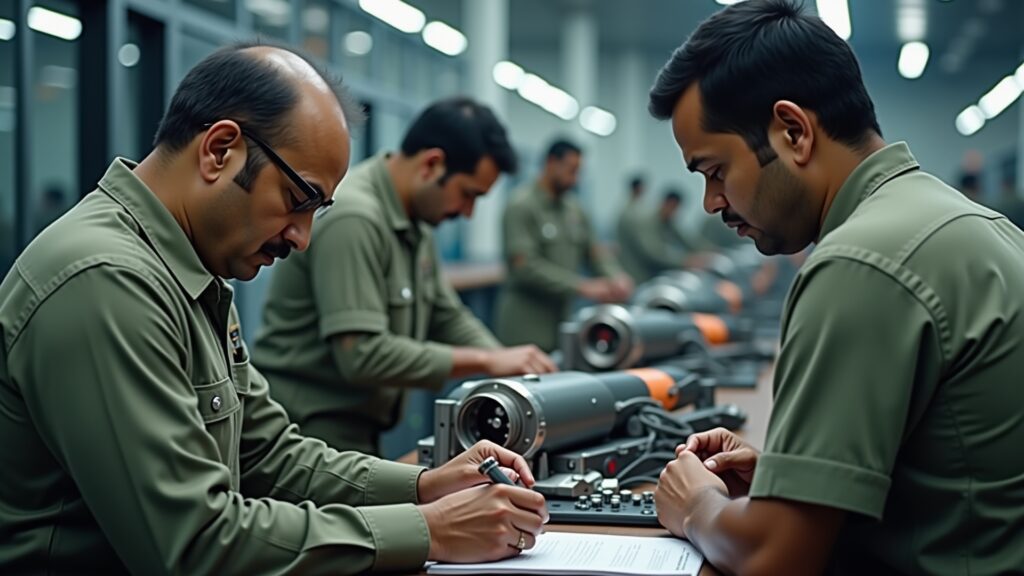
As a defence industry leader, you understand that operational agility is not just a tactical advantage—it is a strategic business imperative. The Indian Army’s recent high-speed, non-stop cross-country relocation of Akash air defence missile crews during Operation Sindoor is a compelling demonstration of this principle in action. This move goes beyond a mere logistical success; it signals transformative shifts with deep implications for defence manufacturing, procurement, supply chain resilience, and indigenous capability development.
Why This Matters to You
Your role as a CEO, investor, or strategic policymaker in the defence ecosystem demands insight into how such operational feats reshape capability profiles and market opportunities. The ability to deploy air defence forces rapidly, seamlessly, and without operational pauses reveals the maturity of India’s defence manufacturing ecosystem and its readiness for global competition. For manufacturers, it underscores the necessity of designing systems tuned for agility. For supply chain leaders, it sounds the call for dynamically responsive logistics. For investors, it highlights emerging strengths in India’s indigenous defence exports that can shift global market dynamics.
The Indian Army’s Akash System Relocation: What Happened?
During Operation Sindoor, the Indian Army executed a rapid, non-stop cross-country relocation of Akash surface-to-air missile air defence crews. This repositioning covered vast geographical distances without operational downtime, demonstrating a highly coordinated effort between defence personnel, logistics teams, and command structures. The Akash missile system itself, a flagship of India’s indigenous defence manufacturing, proved its modularity and deployability under real-world conditions, reinforcing confidence in home-grown air defence solutions.
Key Strategic and Industry Impacts
- Operational Agility as a Business Model: This relocation sets a benchmark for how operational doctrine, combined with defence manufacturing innovation, drives strategic flexibility. Your enterprise must embed such agility in product design and sustainment services to stay relevant.
- Indigenisation Strengthens Market Confidence: The Akash’s performance is a testament to India’s focus on domestic capacity building. This success accelerates technology transfer initiatives, encourages private-sector participation, and opens export pathways that are vital for scaling up defence manufacturing.
- Supply Chain and Procurement Efficiency: High-speed relocations require a lean, responsive, and digitally enabled supply chain. For procurement chiefs, the message is clear—invest in infrastructure and real-time digital systems that eliminate operational delays.
- Leadership and Execution Excellence: The seamless coordination reflects top-notch leadership qualities and disciplined execution standards that should inspire broader defence business transformations.
Deeper Industry Insights
Success in rapid deployment is not accidental. It results from carefully integrated design thinking, where the missile system’s modularity meets agile logistics frameworks supported by robust command-and-control networks. This operation underscores how critical it is for you to align technological innovation with operational doctrines. It also hints at evolving acquisition strategies focusing on systems that add strategic value beyond standalone capabilities.
“In defence, scale matters — but strategic self-reliance matters even more.”
Moreover, the Akash system’s demonstrated mobility is a key enabler in India’s broader strategic autonomy agenda. By minimizing reliance on foreign platforms, you ensure economic benefits flow domestically while simultaneously fortifying national security interests.
Practical Takeaways for Defence Stakeholders
- Embed Mobility in System Design: Prioritize modular, easy-to-deploy system architectures that support rapid repositioning and operational continuity.
- Invest in Supply Chain Digitization: Leverage digital command and logistics platforms to ensure real-time visibility and responsive asset movement.
- Strengthen Indigenous Capability: Support initiatives that enable private-sector and startup innovation within the defence manufacturing ecosystem.
- Focus on Leadership Development: Encourage disciplined execution and precise coordination as core competencies within defence project teams.
“The real edge is not only in buying capability, but in building the industrial depth to sustain it.”
Risks and Challenges You Should Consider
While the operation spotlights capability, it also exposes areas for cautious attention. Complex relocations depend heavily on supply chain resilience; disruptions can cascade into operational delays. Defence manufacturers must continuously innovate to mitigate obsolescence risks in system design. Policymakers need to ensure procurement reforms keep pace with the dynamic operational demands, avoiding bureaucratic inertia that could undermine deployment efficiency.
What You Should Watch Next
Track India’s upcoming procurement policies and investments in logistics infrastructure, particularly those enhancing digital command networks. Observe private-sector collaboration trends, especially startups contributing advanced mobility and sustainment solutions in missile systems. Monitor export deal pipelines for indigenous platforms like Akash, as they will indicate India’s growing competitiveness on the global stage.
Conclusion: Positioning for Strategic and Market Leadership
The Indian Army Akash air defence crew relocation during Operation Sindoor is not just an operational milestone—it is a strategic lens through which you should view India’s defence industry evolution. Harnessing rapid deployment with indigenously produced systems signals a new era of defence capability, firmly rooted in self-reliance and global competitiveness. For your business or investment portfolio, this development exemplifies why agile design, supply chain innovation, and leadership in execution are indispensable as you navigate the future of defence commerce and strategy.
“When procurement clarity, technological innovation, and manufacturing discipline align, defence growth becomes far more durable.”