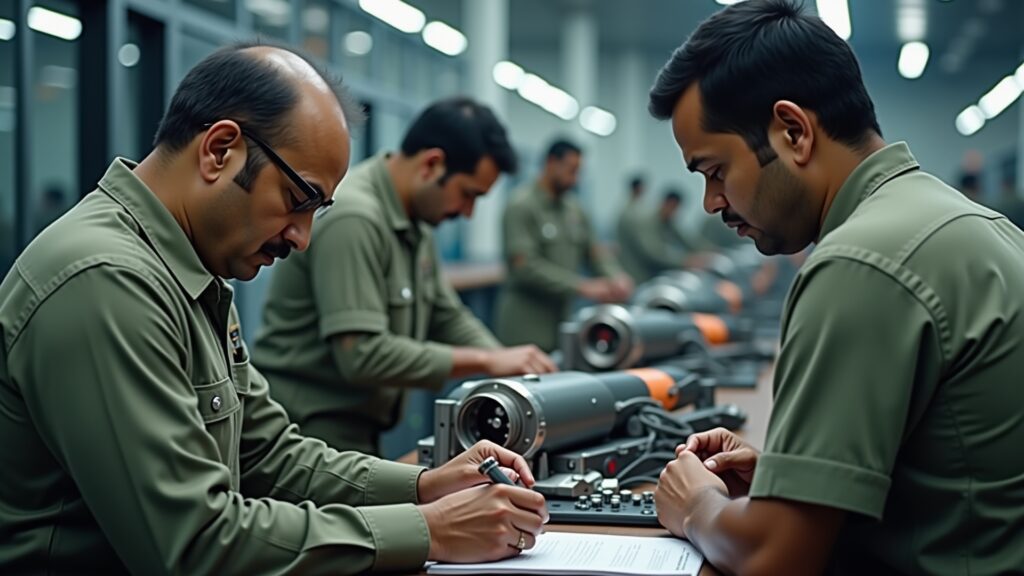
The recent clearance of 2,700 hectares in Saoner, Maharashtra, for the Defence Nuclear Aerospace Corridor is not just another land allotment—it’s a decisive move shaping the future of India’s defence manufacturing landscape. If you are a defence industry leader, investor, or policymaker, this signals a critical juncture for you to engage with an emerging hub poised to redefine aerospace and nuclear defence capabilities through focused indigenisation, innovation, and export growth.
Why This Matters to You
As an industry player or investor, understanding the strategic implications of Maharashtra’s Defence Nuclear Aerospace Corridor is vital. This corridor offers a rare convergence point where India’s defence business ambitions, technology innovation, and manufacturing indigenisation agenda coalesce. For your business decisions, it means tapping into a dedicated ecosystem designed to scale high-technology defence production, boost supply chain synergy, and accelerate capability development in sectors critical to national security and geopolitical relevance.
Stakeholders in private defence manufacturing, aerospace startups, and institutional investors should view this as an opportunity to position themselves advantageously within a comprehensive and policy-backed framework that promotes ‘Make in India’ goals with an emphasis on self-reliance and global competitiveness.
What Is Happening in Maharashtra?
The Government of Maharashtra’s move to clear 2,700 hectares in Saoner for establishing the Defence Nuclear Aerospace Corridor underscores a strategic vision to build a specialised industrial zone dedicated to aerospace assembly, nuclear technology integration, and advanced material manufacturing. Positioned as a multi-sector hub, this corridor is set to unify various defence manufacturing segments under one umbrella, fostering collaboration across private firms, MSMEs, startups, and R&D centres.
This land allocation signals a robust commitment from the state and central governments to create ready infrastructure, attract investments, and stimulate skill development tailored for defence manufacturing’s next generation.
Key Impact on Defence Manufacturing and Market Dynamics
The corridor is positioned to deliver a profound impact on the defence and aerospace market in several ways:
- Industrial Scale-up: It will catalyse the establishment of large-scale manufacturing plants and state-of-the-art innovation hubs to advance India’s aerospace and nuclear defence production capabilities.
- Supply Chain Integration: By attracting MSMEs and startups through frameworks like iDEX, the corridor fosters faster technology adoption and transfers, enhancing resilience and reducing reliance on foreign supply chains.
- Workforce Development: Training institutes linked to this ecosystem will equip your workforce with specialised skills critical for sophisticated defence manufacturing roles.
- Export Propulsion: Enhanced manufacturing capabilities coupled with export-oriented policy support position India as a credible contender in high-value global markets such as aerospace and strategic defence technology segments.
Strategic Insights Into National Defence and Industrial Policy
In the broader context of India’s defence industrial strategy, this corridor exemplifies how regional initiatives align with national imperatives like Atmanirbhar Bharat and Make in India. It underscores the necessity of transitioning from fragmented defence production to integrated ecosystems that leverage private-sector innovation, reduce procurement cycle times, and enable flexibility in scaling production for strategic contingencies.
Consider that maintaining strategic technological advantage demands a balance between developing indigenous capabilities and creating an agile supply chain that can respond to dynamic defence requirements. Maharashtra’s corridor initiative offers that balance, emphasizing:
- Strategic autonomy through domestic capability building.
- Synergistic collaboration between startups, MSMEs, and large manufacturers.
- Export readiness aligned with global standards and demands.
- Investment attractiveness backed by clear policy signals and infrastructure readiness.
“In defence, scale matters — but strategic self-reliance matters even more.”
“The real edge is not only in buying capability, but in building the industrial depth to sustain it.”
Practical Takeaways for Industry Stakeholders
- Understand the Ecosystem: Dive into the opportunities this corridor offers—from innovation hubs to manufacturing clusters—to align your business strategy accordingly.
- Monitor Policy Developments: Keep a close watch on Maharashtra and central government policies supporting infrastructure, skill development, and export facilitation.
- Collaborate Proactively: Engage with startups and MSMEs in the corridor to leverage fresh technologies and accelerate your R&D efforts.
- Invest Strategically: Consider the corridor a promising investment destination given its alignment with national defence priorities and export ambitions.
- Prepare for Skill Upskilling: Plan to invest in workforce training and partnerships with local institutions to build the specialised talent your manufacturing operations will require.
Expert Perspective
Embedding innovation, manufacturing scale, and supply chain resilience under one roof is a complex task but vital for future-proofing India’s defence industrial base. By embedding nuclear and aerospace technologies within a singular corridor, Maharashtra offers a blueprint for integrated defence zones that could become the norm nationwide.
“When procurement clarity, technological innovation, and manufacturing discipline align, defence growth becomes far more durable.”
Risks and Challenges to Keep in Mind
While the corridor’s promise is substantial, successful execution hinges on several factors. Regulatory hurdles, land acquisition complexities beyond initial clearance, infrastructure development delays, and the integration of the private sector remain critical risks. Additionally, ensuring technology transfer security and maintaining quality standards in indigenous production will require vigilant oversight.
Ensuring that startups and MSMEs get sustained support to scale and contribute meaningfully also poses ongoing challenges, especially in such high-technology spheres.
What You Should Watch Next
- Announcements related to infrastructure development timelines and facility inaugurations within the corridor.
- Government and private partnership deals that leverage the corridor’s ecosystem.
- Policy updates regarding defence exports and procurement norms linked to corridor production units.
- The emergence of key technology demonstrators or prototypes developed or manufactured in the corridor.
Conclusion
The Maharashtra Defence Nuclear Aerospace Corridor creates a strategic catalyst designed to drive India’s defence manufacturing into a new era where industrial scale, innovation, and global competitiveness converge. For you as a leader, investor, or innovator, engaging with this corridor means securing a foothold in one of the most significant emerging defence-industrial ecosystems in the country.
By strategically aligning your operations or investments with this initiative, you embrace the opportunities embedded in the nation’s push towards self-reliance and global defence market leadership. Watch closely, act decisively, and position yourself at the center of India’s evolving defence manufacturing renaissance.
Focus Keywords: Maharashtra Defence Nuclear Aerospace Corridor, defence manufacturing, aerospace innovation, defence exports, indigenisation, supply chain resilience.